Where Ohm’s law came from
A schoolmaster in Cologne with no laboratory, no assistant and no budget found the rule every circuit obeys, published it in 1827, and was written off as a fraud. It took fourteen years and a foreign medal before anyone agreed, and the unit stamped on your resistors is his name.
The next page is the equation, and it is one line. This one is where the line came from, because none of it was obvious: it took a lucky accident in a lecture theatre, two years of a schoolmaster's evenings, and one ruined career.
Nothing here needs a board, a meter or a soldering iron. If you only want the three words and the sum, go straight to voltage, current, resistance and come back for this afterwards.
Nobody could see it
For two hundred years before this story starts, electricity was a party trick. You rubbed glass, a spark jumped, and that was the whole of it — a bang with nothing in between.
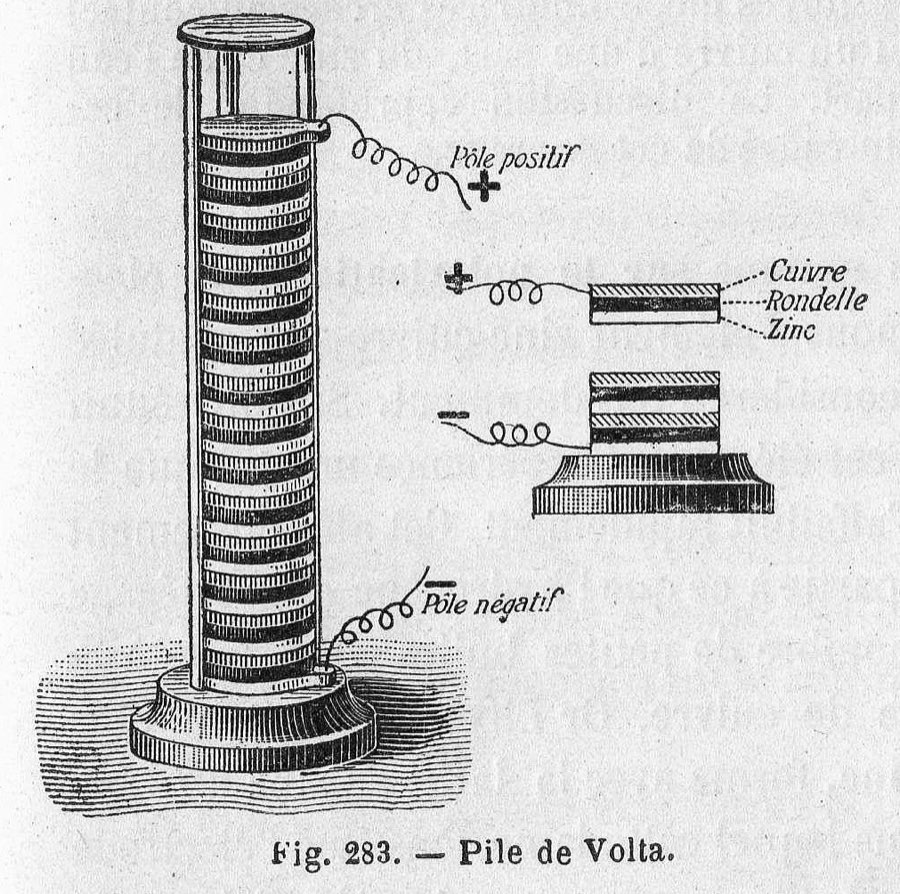
Then in 1800 Alessandro Volta stacked discs of zinc and copper in a column with brine-soaked card between each pair. Join the two ends with a wire — a closed loop like that is what the word circuit means — and something came out of it and kept coming out of it, for hours. It was the first steady current anybody had ever had.
And nobody could tell how much of it there was. You could taste it on your tongue. You could feel it in your arm. There was no meter, no dial, no number — nothing that would tell you whether this pile was pushing twice as hard as that one.
April 1820: the needle
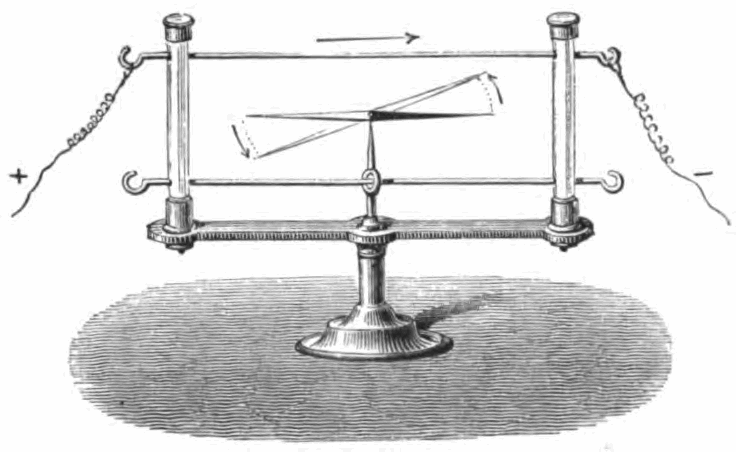
Hans Christian Ørsted was giving a lecture in Copenhagen. There was a compass on the bench, left over from something else, and a wire above it. He closed the circuit, and the needle swung.
He had not touched it. Nothing magnetic had come near it. A current in a wire, it turned out, pushes a compass needle around — and the harder the current, the further round it goes.
That last part is what matters here. The needle was not a second party trick. It was the first thing anybody had ever had that would turn an invisible current into a number.
A schoolteacher in Cologne
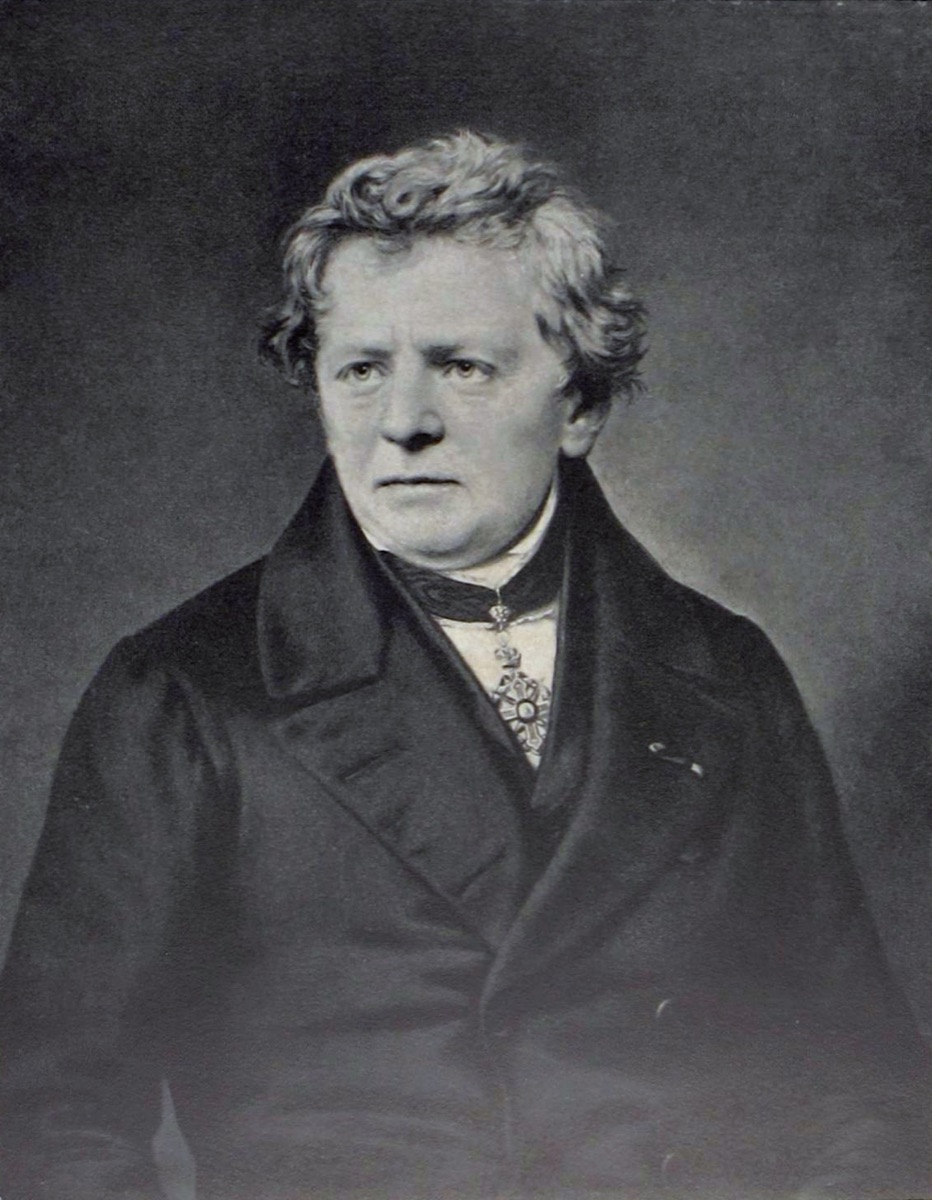
Georg Simon Ohm was thirty-six, teaching mathematics to boys at a school in Cologne. He had no laboratory, no assistant and no budget. He wanted a university chair and there was exactly one way for a schoolmaster to get one, which was to find something nobody else had found.
So he built the apparatus himself and went after the obvious question: if you push harder, how much more comes out?
He hit the problem immediately. His voltaic pile would not hold still. It faded as it ran, so the reading at the end of an afternoon was not the reading at the start, and he could not tell his own results apart from his own equipment going flat.
His fix is the part of this story worth stealing. He threw the battery away and used heat instead — a strip of bismuth joined to a strip of copper, one junction in boiling water and the other in melting ice. A join between two different metals held at two different temperatures makes a small, steady voltage. The join is called a thermocouple, and unlike a battery it does not run down: boiling water is boiling water all afternoon.
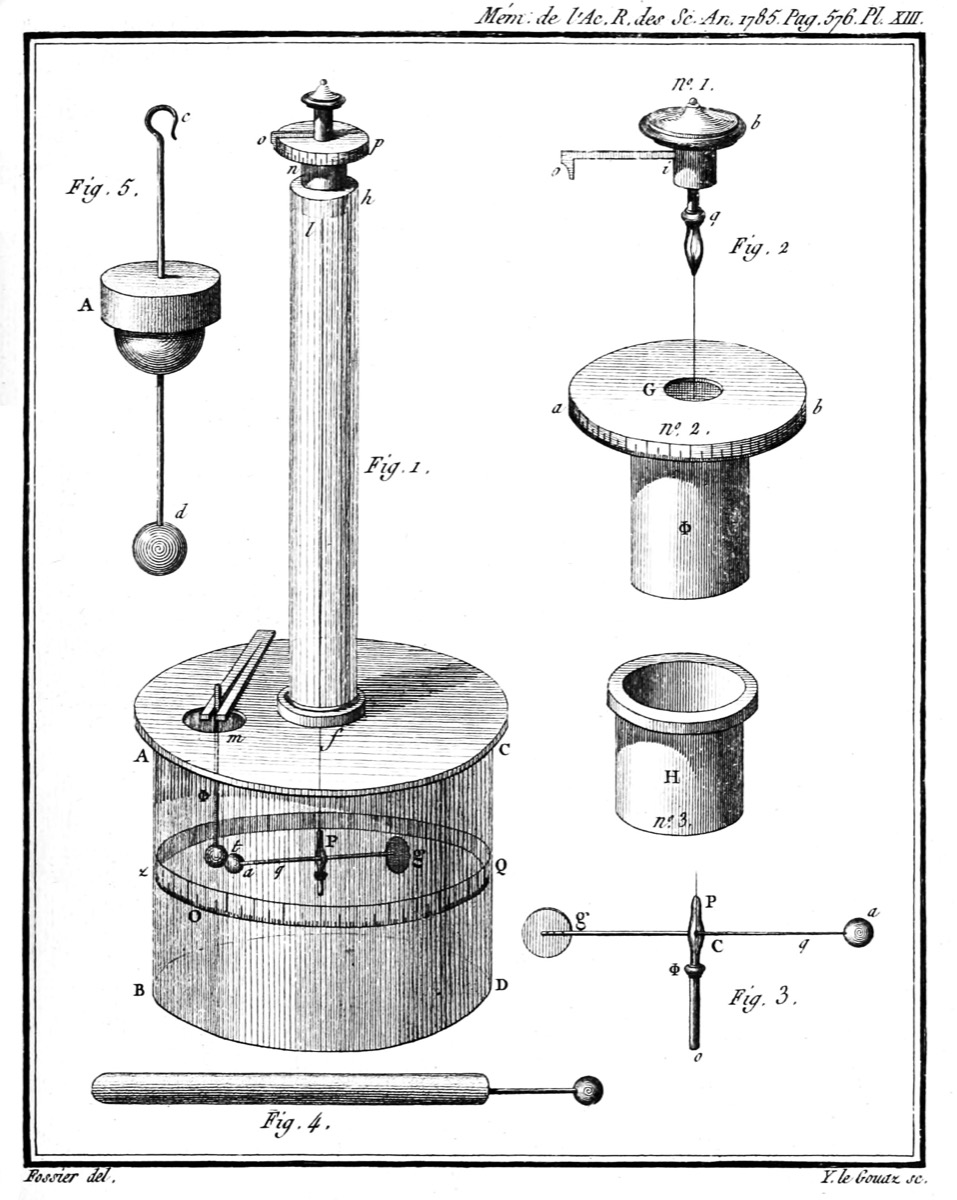
For the reading he hung a magnetic needle on a fine thread over the wire, the way Coulomb had once hung a beam to weigh the force between two charges. Close the circuit, the needle turns; twist the thread until the needle comes back to where it started; read off the twist. Now the current had a number.
Then he did the boring, decisive thing. He took one wire, of one metal and one thickness, cut it to eight different lengths, and put each one in the circuit in turn.
The readings fell on a curve. Twice the length, roughly half the current. And the curve had a formula:
X = a ÷ (b + x) — where x is the length of wire he put in, a is the push his thermocouple was making, and b is everything else in the loop that was already in the way.
Read that in today's words and it is I = V ÷ R, with the battery's own share of the resistance already sitting in it. Ohm had the whole thing on the first day — including the part most people still get wrong two centuries later, which is that the supply is part of the circuit and gets in the way too.
1827: the book nobody wanted
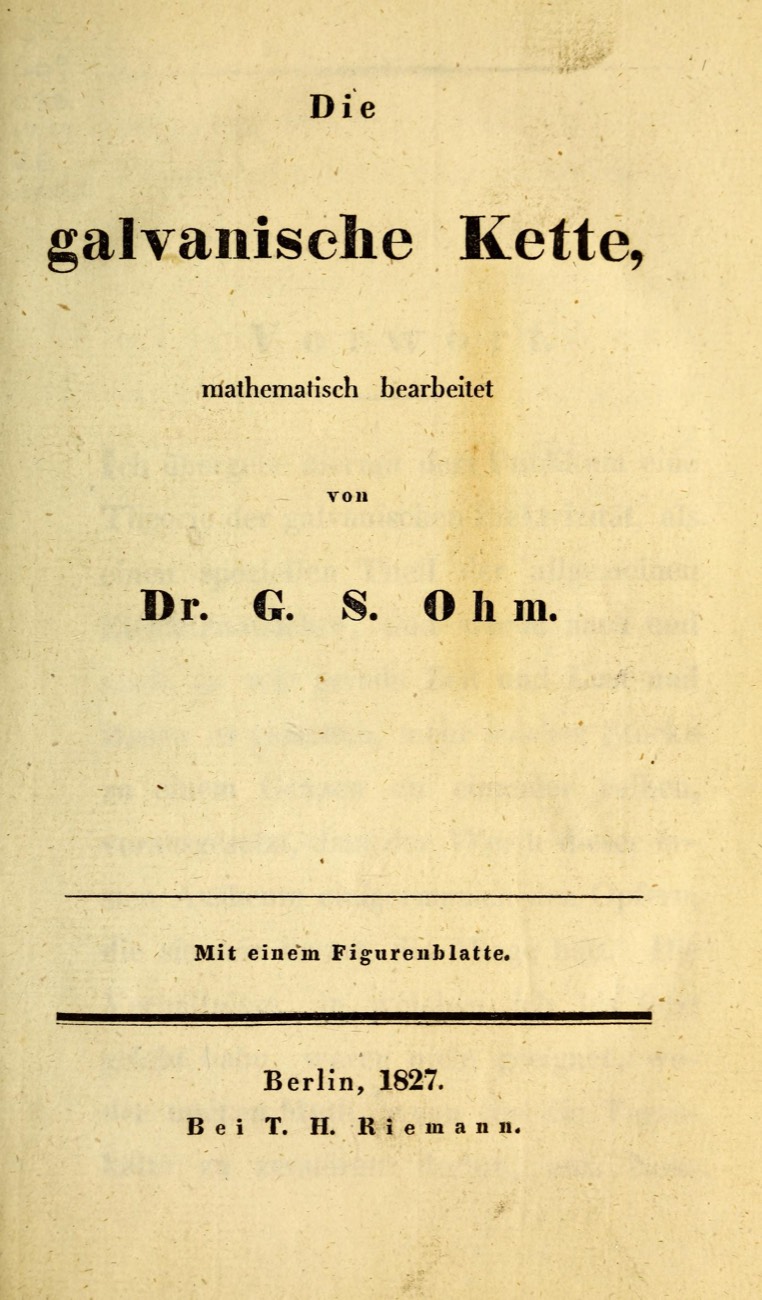
It went badly. German physics at the time did not think electricity was the sort of thing you measured — you were supposed to reason about it. One reviewer, Georg Friedrich Pohl, wrote the book off as "a web of naked fancies".
Ohm resigned from the school in 1828 and did not get another proper post for five years. He taught part-time at a military school in Berlin. He was forty-four before he got a job at a polytechnic in Nuremberg.
Then it turned round, from outside. English and French experimenters started using his result because it worked, and in 1841 the Royal Society in London gave him the Copley Medal — the highest thing it had. He got to Munich in 1849 and the professorship in 1852, two years before he died. In 1881, in Paris, an international congress of electricians sat down to name the electrical units, and the unit of resistance became the ohm.
Every resistor in your drawer is stamped with a dead schoolteacher's argument that you can measure this stuff.
What he left you
Three words and one equation, which is the next page: voltage pushes, current moves, resistance gets in the way, and you only ever get to choose two of them.
And the habit underneath it. When a circuit does something you did not expect, there is a number behind it, and the number can be got at — with worse equipment than you have.
Edit this page — content/fundamentals/electricity/where-ohms-law-came-from.mdx
Discuss this article
Ask about this page. The answer stays here, on the page it belongs to, for whoever hits the same wall next.