Storage
SD cards, onboard flash and EEPROM. Where readings go when the WiFi is down and you still need the data.
SD and microSD Card Readers for ESP32: SPI, 1-bit and 4-bit
Two 3.3 V card reader boards with the SD bus brought out in full. What the two NC pins really are, which of SPI, 1-bit and 4-bit to use, what each measured, and the wiring for all three.
28. EEPROM Memory
First use of I2C: read/write EEPROM with Wire library; outcome: write a value (e.g. 123) to EEPROM, power off and on, read from the same address—data is still there, proving it survives power loss.
43. Project: EEPROM Settings
Project: save LED on/off state in EEPROM; outcome: button toggles LED and writes state to EEPROM; after power off and on, state is read from EEPROM and LED is restored.
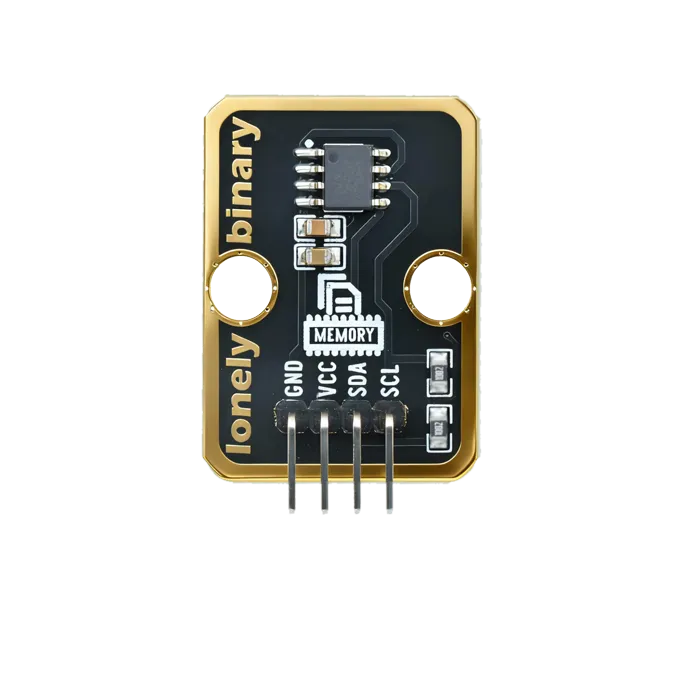
EEPROM Memory
Bytes that survive a power cut, over I2C. Where settings go when there is no SD card — and the chip that teaches you writes are not free.