
led
9 pages across tutorials, modules, pinouts and guides.
Electronics Starter Kit: Breadboard, Power Module and Loose Parts
A boxed set of the parts most breadboard circuits start with: an 830-point breadboard, a USB-C power module switchable between 3.3 V and 5 V, jumper wires, resistors, capacitors, LEDs, buttons, potentiometers, diodes, transistors, MOSFETs and two sensors. How to read the parts, set up the bench, and build the first circuits.
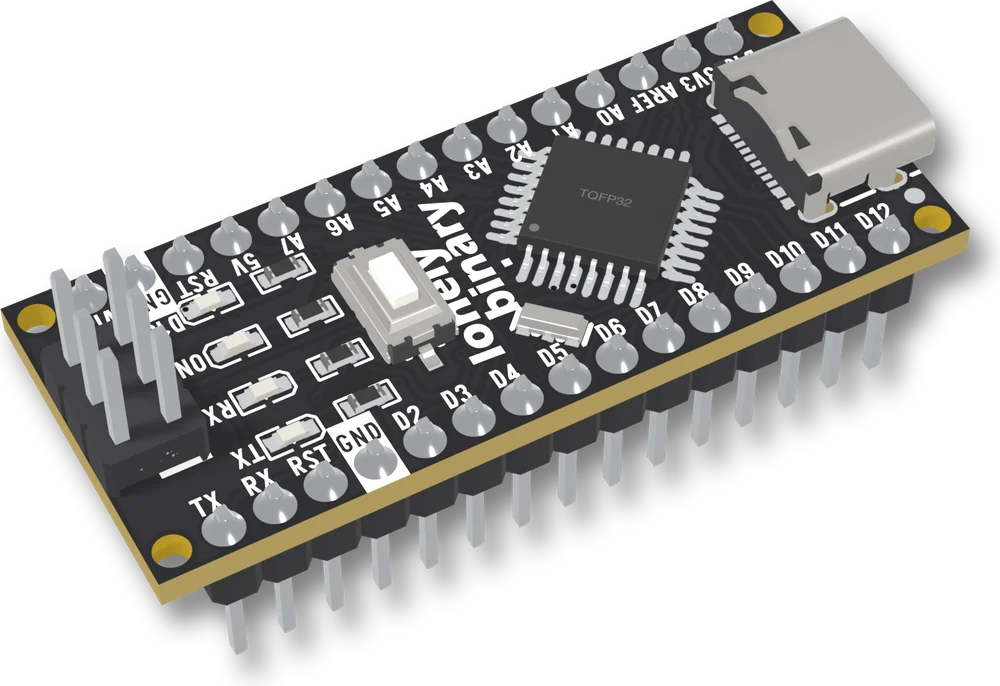
Nano V3.0 USB-C and PinPulse Shield: Seating the Nano, the LEDs and the First Sketch
A Nano V3.0 with an ATmega328P and USB-C, and a shield that puts a light on 22 of its pins. The one rule: power off before the Nano goes into the shield or comes out of it, the right way round, pushed fully home.
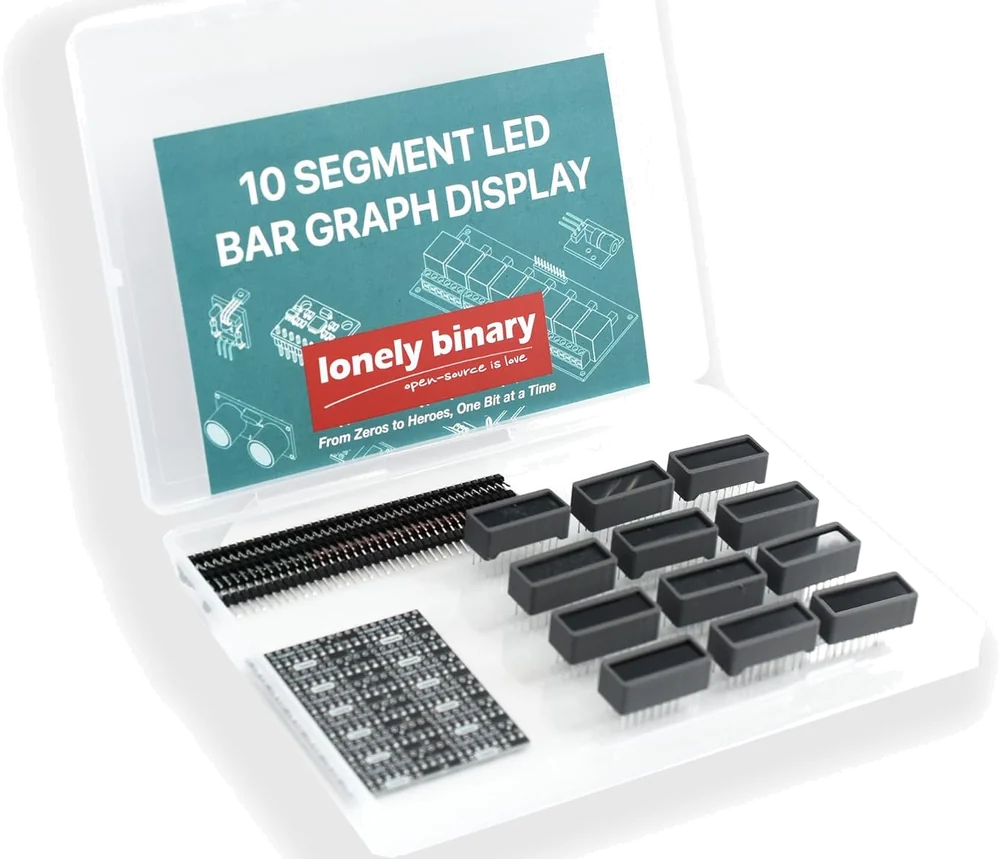
10-Segment LED Bar Graph Display
Ten independent LEDs in one 20-pin package, with a resistor board that puts 220 Ω in front of each. Which way round it goes, why LOW lights a segment, and what ten of them at once costs an Arduino.
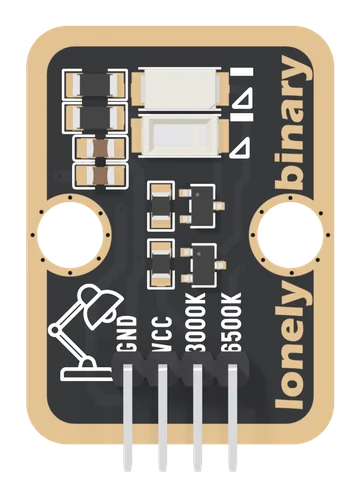
Dual Bright LEDs
Two 5730-size white LEDs on a TinkerBlock board, one warm (3000K) and one cool (6500K), each switched by its own S8050 transistor with a 10 Ω resistor from VCC. A pin for each colour, PWM for brightness and for every white between the two. VCC may be 5 V on a 3.3 V board; on 5 V, cap the PWM at two thirds.
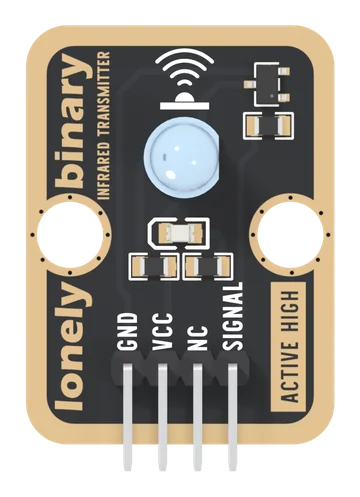
Infrared Transmitter
A 5 mm, 940 nm infrared LED on a TinkerBlock board, switched by an S8050 transistor, with one 150 Ω resistor setting its current from VCC and a red LED that shows when it is on. SIGNAL HIGH turns it on. Your pin only feeds the transistor, so VCC may be 5 V on a 3.3 V board. Blink it, send remote-control codes to a TK15, or make a break-beam with a TK64.
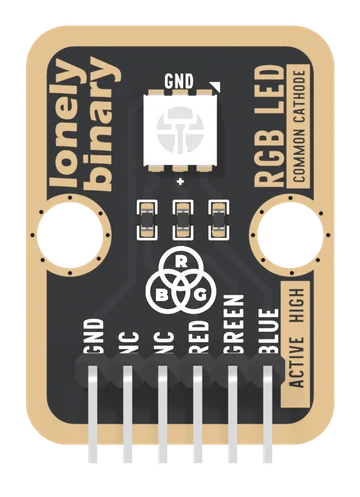
RGB LED
A red, a green and a blue LED in one 5 mm package, each with its own 1 kΩ resistor and its own pin, joined at a common cathode. Three PWM pins mix any colour, and the handbook works out why three equal numbers are not white.
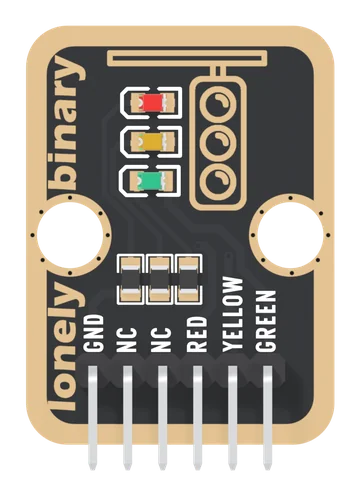
Traffic Light
Red, yellow and green LEDs, each with its own 1 kΩ resistor and its own pin, sharing one GND: three digital outputs, and the first sketch that has to remember what it is doing.
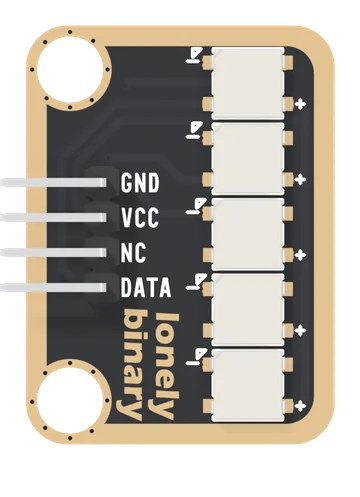
WS2812 RGB LED Bar
Five addressable RGB LEDs on one data wire. VCC wants 5 V, each colour runs at 12 mA, the LEDs read green first, and the chain ends at the fifth LED.
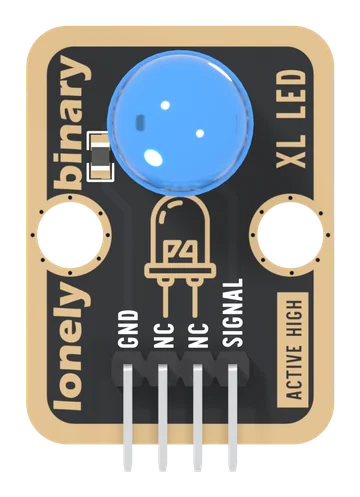
XL LED
A 10 mm blue LED with its 150 Ω resistor already fitted, driven by one pin: the first output most people ever drive, and the light every later lesson uses to show that something happened.