SPI
6 pages across tutorials, modules, pinouts and guides.
SD and microSD Card Readers for ESP32: SPI, 1-bit and 4-bit
Two 3.3 V card reader boards with the SD bus brought out in full. What the two NC pins really are, which of SPI, 1-bit and 4-bit to use, what each measured, and the wiring for all three.
SPI TFT LCD Display Kit, 0.96 to 3.5 inch
Six colour SPI displays that are electrically one display: the same 15-pin ribbon, the same eight pads, the same eight wires. Which size to pick, how to wire it, and the one constant that swaps between them.
32x8 LED Matrix with MAX7219, 3-Pack
Four 8x8 squares in one strip, 256 LEDs, three signal wires. What the pads are called, why the sketch has to say four, and what to do about a 3.3 V board on a chip that wants 3.5 V.
Logic Level Converters: MOSFET 2/4/6-Channel, TXB0108 and TXS0108
Five boards that let a 3.3 V board and a 5 V part share a wire safely. Which one to use for I²C, SPI, serial or an LED strip, which side is which, and the three wires that come before any signal.
Logic Analyzer Kit, 8-Channel 24 MHz
Eight channels sampled at up to 24 MS/s, straight up a USB cable. It decodes I²C, UART and SPI at the speeds a microcontroller actually runs, and the sample rate is the number that decides the rest.
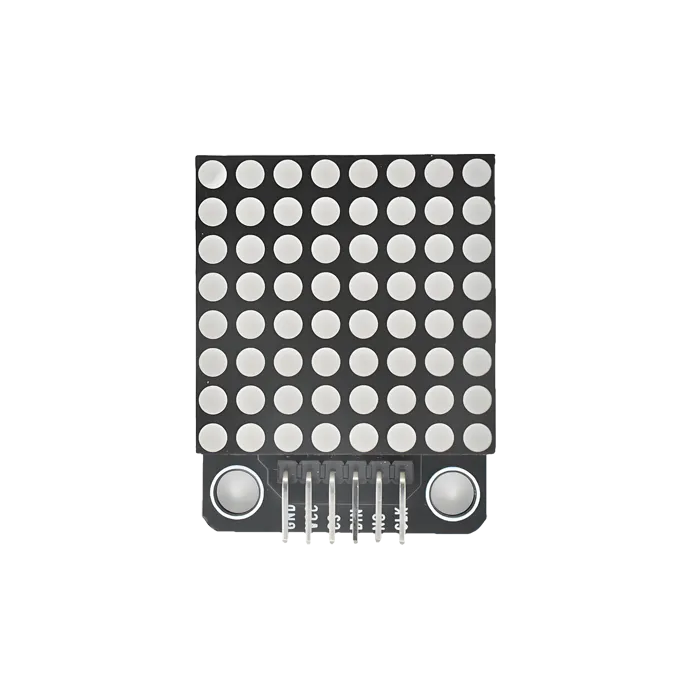
8x8 LED Matrix
Sixty-four LEDs and a MAX7219 that scans them for you. Two boards share this page — the TinkerBlock TK52 and the chainable module that comes three to a box — and only one of them can be chained.