I²C
7 pages across tutorials, modules, pinouts and guides.
INA219 and INA3221 Current Monitors: shunt, range and wiring
Two I²C current and voltage monitors: the TK119 with one INA219 on a 100 mΩ shunt, and the INA3221 with three channels on 50 mΩ. What the chip measures and what it works out, why the two resistors differ, the range and step each one gives, and the wiring for both.
SHT31 Temperature and Humidity Sensor
A Sensirion SHT31 on a TinkerBlock carrier: two numbers over two shared wires, calibrated at the factory, with the pull-ups already fitted and two jumpers on the back that set the address and take them away again.
1602 I²C LCD Display Module, 16×2 Blue
A 16 × 2 character display with the I²C chip on the board rather than on a backpack. Four wires, address 0x27 by default, three solder pads to change it, and a contrast trimmer that explains most blank screens.
ADS1115 16-Bit ADC I2C Module
Four analog inputs on two wires, with a real 16-bit converter and its own reference — the part you reach for when analogRead is not good enough. Which range to pick, why the supply is the real ceiling, and the two addresses this board can take.
Logic Level Converters: MOSFET 2/4/6-Channel, TXB0108 and TXS0108
Five boards that let a 3.3 V board and a 5 V part share a wire safely. Which one to use for I²C, SPI, serial or an LED strip, which side is which, and the three wires that come before any signal.
Logic Analyzer Kit, 8-Channel 24 MHz
Eight channels sampled at up to 24 MS/s, straight up a USB cable. It decodes I²C, UART and SPI at the speeds a microcontroller actually runs, and the sample rate is the number that decides the rest.
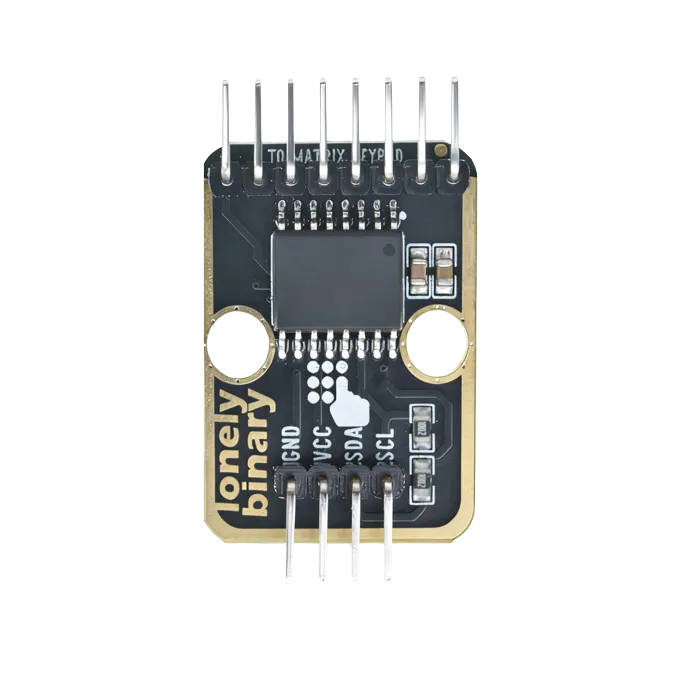
Matrix Keypad with I2C Adapter (4x4, PCF8574)
A 4×4 keypad on two I²C wires instead of eight GPIO pins. The TK85 adapter, the soft and heavy-duty keypads, the two keymaps they need, and how to put two on one bus.