Displays
OLED, LCD, e-paper and LED matrices. Getting the first pixel on screen is most of the work — after that it is layout.
58mm Thermal Printers: the receipt kit, the label kit and the USB-C base board
Two thermal printer kits that share one Type-C TTL base board. The 9 V a USB port will not give you, which header your microcontroller belongs on, the baud rate printed on each unit, and the commands that put text, barcodes and labels on paper.
SPI TFT LCD Display Kit, 0.96 to 3.5 inch
Six colour SPI displays that are electrically one display: the same 15-pin ribbon, the same eight pads, the same eight wires. Which size to pick, how to wire it, and the one constant that swaps between them.
0.56-inch 7-Segment Digits with a 74HC595 Driver Board
A 24-pack of 0.56" seven-segment digits and twelve 74HC595 driver boards: three wires instead of eight, which digit is common cathode and which is common anode, how the ten pins line up, and the current limit that bites on 8.
10-Segment LED Bar Graph Display
Ten independent LEDs in one 20-pin package, with a resistor board that puts 220 Ω in front of each. Which way round it goes, why LOW lights a segment, and what ten of them at once costs an Arduino.
1602 I²C LCD Display Module, 16×2 Blue
A 16 × 2 character display with the I²C chip on the board rather than on a backpack. Four wires, address 0x27 by default, three solder pads to change it, and a contrast trimmer that explains most blank screens.
32x8 LED Matrix with MAX7219, 3-Pack
Four 8x8 squares in one strip, 256 LEDs, three signal wires. What the pads are called, why the sketch has to say four, and what to do about a 3.3 V board on a chip that wants 3.5 V.
4″ 7-Segment LED Display with 74HC595
A 100 mm digit with its own shift register on the back. Five wires from your board, a 12 V supply for the segments, and modules that plug into each other to make longer numbers.
MAX7219 Vintage Tube LED Clock Kit
Eight 0.28-inch digits on a MAX7219, in a glass tube with a cork. Three displays arrive built and three arrive as pieces — a driver board and two four-digit panels, in red or blue, with a colon or with decimal points.
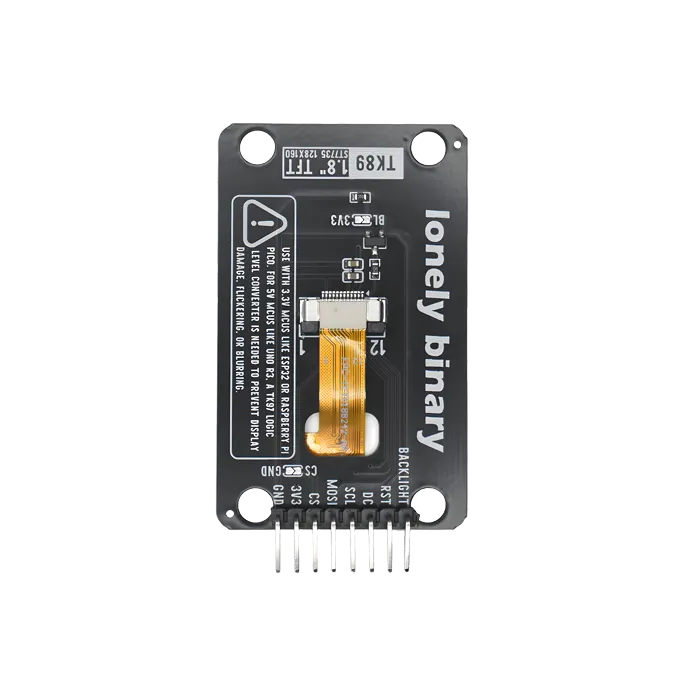
1.8-inch TFT Display
160 by 128 in colour over SPI. Enough pixels for a dashboard, few enough to redraw quickly — and the display that teaches you about partial updates.
16. PWM Fading LED
Learn PWM and analogWrite(); use a for loop for outcome: LED fades from dim to bright and back to dim—a breathing light.
2. First Program: Blink
Write your first program to make TK01 blink; understand setup/loop and digital output.
20. RGB Color Mixing
Learn to control RGB with analogWrite() on three channels; outcome: cycle through red, green, blue, white, yellow, purple, cyan, about 1 s each.
21. TM1637 4-Digit Display
Learn library install and use; control the 4-digit display with TM1637Display library; outcome: display counts up from 0 to 9999, changing every 0.5 s, then repeats.
22. Matrix LED
Learn to control the 8×8 matrix with LedControl library and arrays; outcome: matrix shows a heart pattern for about 1 s, then clears, repeat.
23. Custom Functions
Learn custom functions; outcome: wrap “on 200 ms, off 200 ms” in myBlink(), call it from loop, LED blinks at a fixed rhythm.
24. 1.8 Inch TFT Display
Learn to drive the TFT with Arduino_GFX library; outcome: screen first shows "Hello!", then cycles "TFT Screen" and full-screen red, green, blue.
25. WS2812 RGB LED Bar
Learn to control the WS2812 bar with FastLED library; outcome: one red LED moves along the bar in sequence—a running light.
37. Extreme Bright Dual LEDs
Use PWM to control warm white (3000K) and cool white (6500K) separately; outcome: show warm white, then cool white, then mixed light, each about 2 s, repeat.
4. Traffic Light
Control three LEDs in sequence; learn multi-pin digital output and #define.
44. Project: TFT Sensor Display
Project: show sensor data on TFT; outcome: screen refreshes periodically with current temperature and humidity (Temp: xxC, Humi: xx%).
6. RGB LED
Control three RGB LED channels; learn multi-channel digital output and #define.
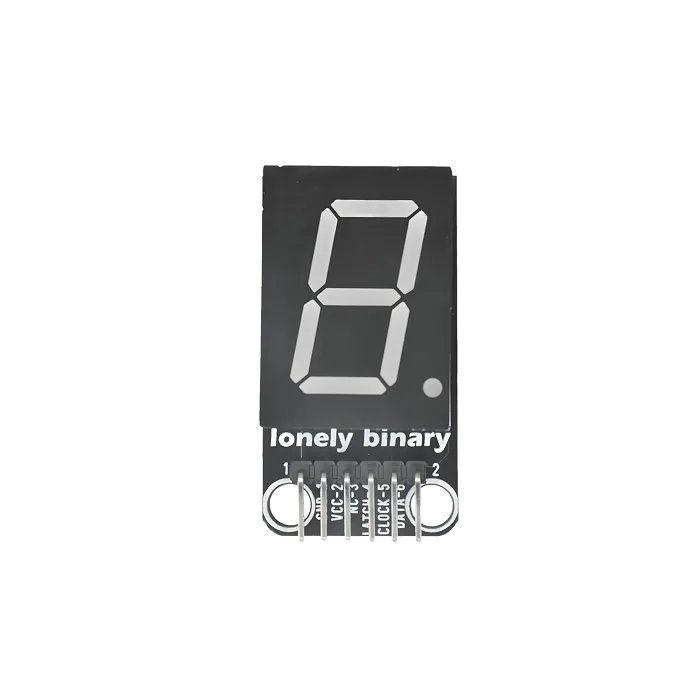
74HC595 Segment LED
Segment digits driven through a shift register: three pins for eight outputs, and the trick worth learning once because it applies to everything.
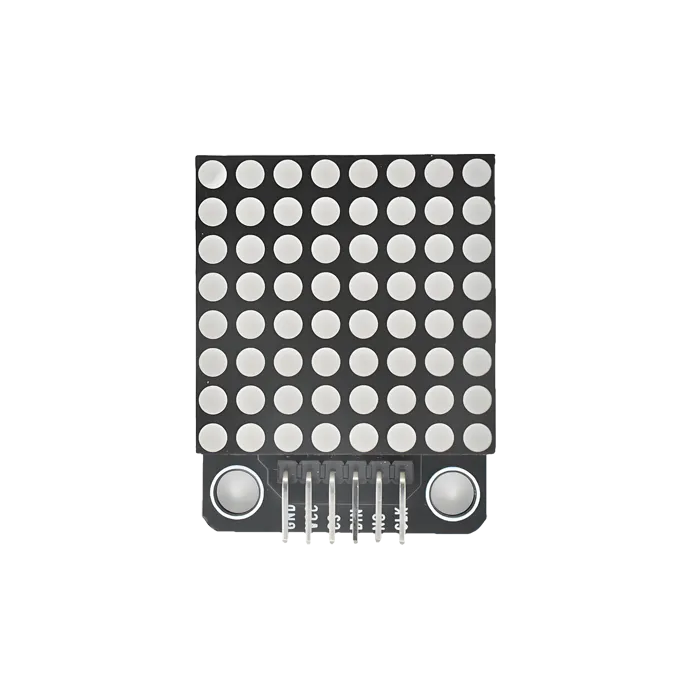
8x8 LED Matrix
Sixty-four LEDs and a MAX7219 that scans them for you. Two boards share this page — the TinkerBlock TK52 and the chainable module that comes three to a box — and only one of them can be chained.
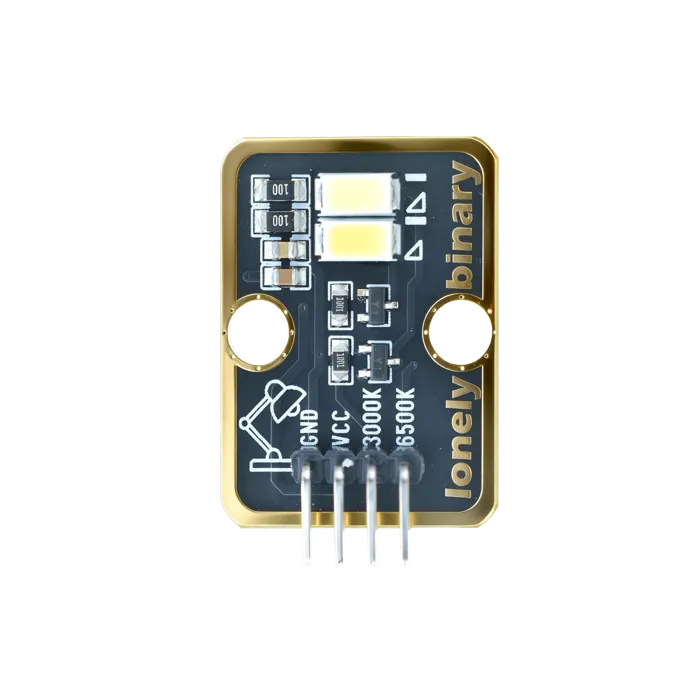
Dual Bright LEDs
Two high-output LEDs with the resistors already fitted. A torch, or a flash for a robot's camera — and enough current draw to matter.
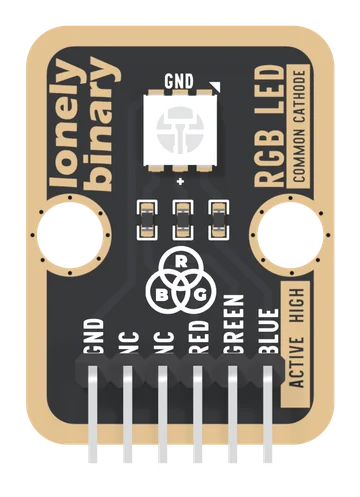
RGB LED
A red, a green and a blue LED in one 5 mm package, each with its own 1 kΩ resistor and its own pin, joined at a common cathode. Three PWM pins mix any colour, and the handbook works out why three equal numbers are not white.
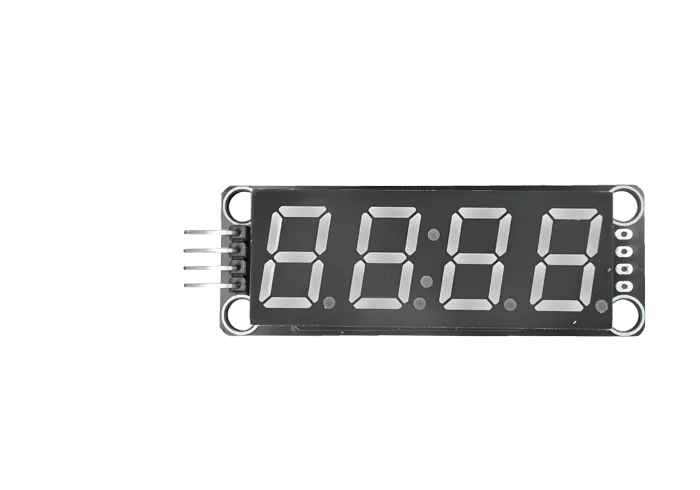
TM1637 4-Digit Display (0.56 inch)
Four seven-segment digits on two ordinary pins. The clock set with its colon, the digit set with decimal points, the TinkerBlock TK51, and the one bit that behaves differently on each.
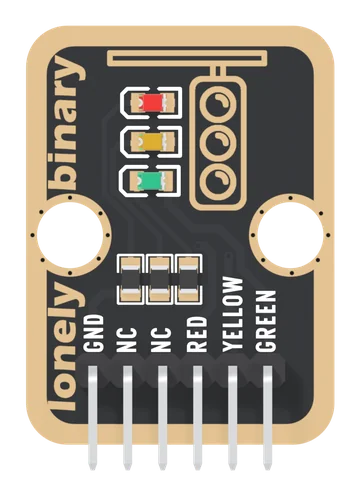
Traffic Light
Red, yellow and green LEDs, each with its own 1 kΩ resistor and its own pin, sharing one GND: three digital outputs, and the first sketch that has to remember what it is doing.
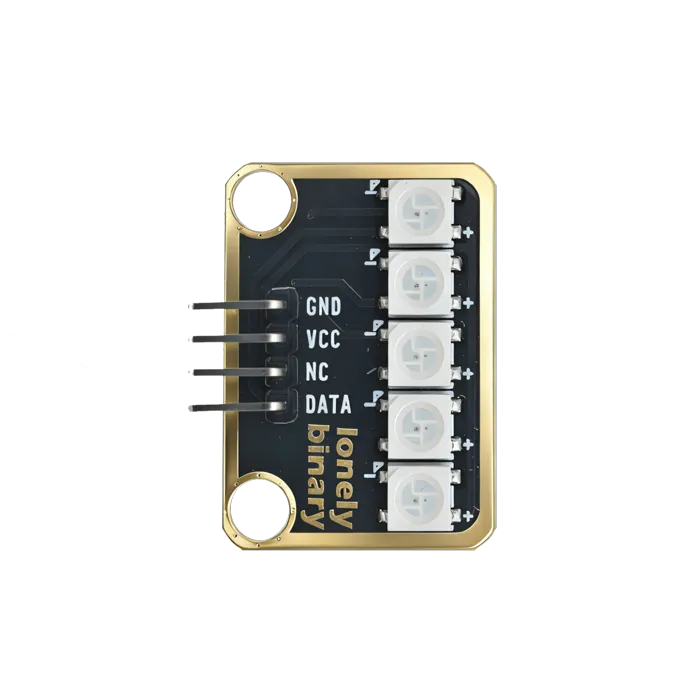
WS2812 RGB LED Bar
Addressable LEDs on a single data line. The timing is strict enough that the library talks to it and you do not.
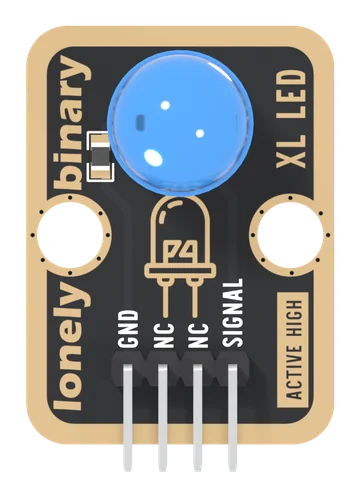
XL LED
A 10 mm blue LED with its 150 Ω resistor already fitted, driven by one pin: the first output most people ever drive, and the light every later lesson uses to show that something happened.