Sensors
Temperature, humidity, motion, distance, light and air quality. Wiring, the library that actually works, and what the numbers mean once they arrive.
SHT31 Temperature and Humidity Sensor
A Sensirion SHT31 on a TinkerBlock carrier: two numbers over two shared wires, calibrated at the factory, with the pull-ups already fitted and two jumpers on the back that set the address and take them away again.
ADS1115 16-Bit ADC I2C Module
Four analog inputs on two wires, with a real 16-bit converter and its own reference — the part you reach for when analogRead is not good enough. Which range to pick, why the supply is the real ceiling, and the two addresses this board can take.
10. Tilt Sensor
Learn the tilt sensor.
12. NTC Thermistor
Learn to read NTC with analog input and do simple conversion; outcome: serial continuously shows raw value (0–1023) and converted voltage (0–5V); values change when you warm the module.
13. Ambient Light Sensor
Learn to read light with analog input; outcome: serial shows light value (0–1023)—cover light and value drops, shine light and value rises.
14. Knock Sensor
Learn the knock sensor; outcome: tap the module and the LED turns on; stop and it turns off.
27. NTC Thermistor Temperature Sensor
Learn to use analog input and the Beta equation to convert NTC thermistor voltage to temperature.
31. I2C Temperature LM75
Use Wire library for I2C to read LM75 temperature; outcome: serial continuously shows temperature (°C); warming the sensor makes the value rise.
33. Steam Sensor
Use analog input to read the steam sensor; outcome: serial shows steam value (0–1023); breathing on the sensor or spraying water vapor raises the value.
36. Piezo Sensor
Use analog input to read the piezo sensor; outcome: serial shows pressure/vibration value (0–1023); tapping or pressing increases the value.
38. Project: Temperature Humidity Display
Project: read temperature and humidity and display; outcome: serial shows temperature and humidity continuously, or 4-digit display shows temperature (integer).
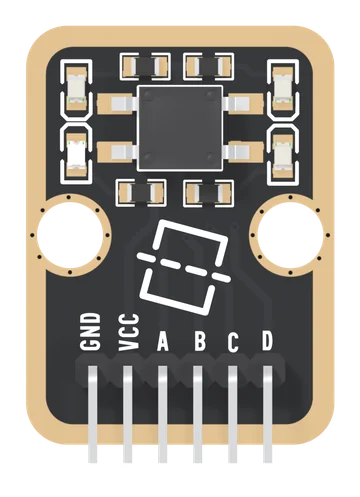
4-Direction Tilt Sensor
One metal roller in a square switch with four corner contacts, on a TinkerBlock board: tip an edge down and the roller joins that side's two lines. Your board finds which pair by holding one line LOW and reading who follows. Four answers and none, no angle, and four red LEDs that light when a line is held LOW.
8. Collision Sensor
Learn the collision sensor.
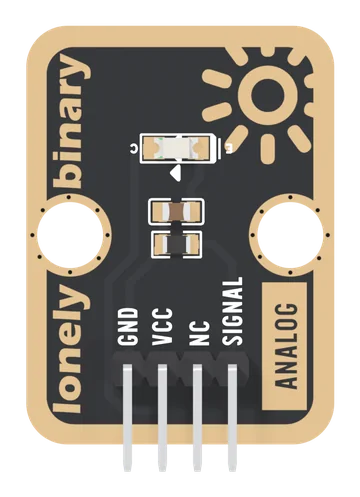
Ambient Light Sensor
A phototransistor and a 4.7 kΩ resistor on a TinkerBlock board: light makes a current, the resistor turns it into a voltage, and SIGNAL rises with the light. A lit room reads low on the scale, bright light flattens just under VCC, and it sees near infrared best.
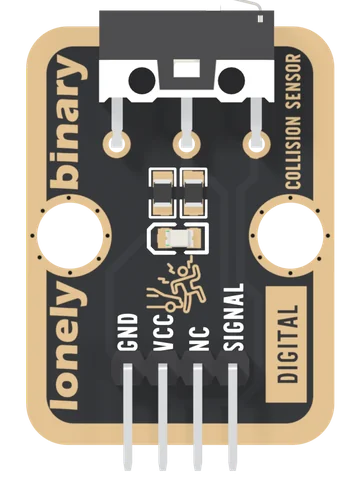
Collision Sensor
A lever microswitch with its 10 kΩ pull-down and a red hit light already fitted: SIGNAL reads HIGH while the lever is pushed in. The bumper for a TinkerBlock robot, and the sense that never reports a wall that is not there.
DHT11
The DHT22's cheaper sibling on the same board design: whole degrees, five per cent humidity, and a range that stops at 0 °C. Right for learning, wrong for anything you will act on.
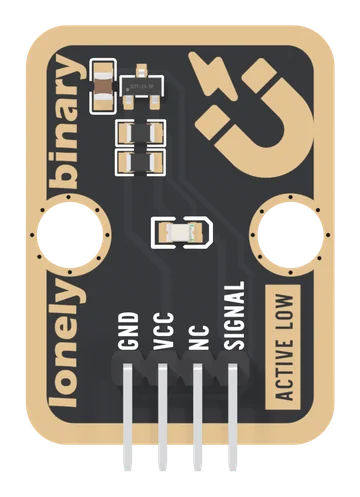
Hall Effect Sensor
An omnipolar Hall switch on a TinkerBlock board: bring either pole of a magnet near and SIGNAL goes LOW and a red light comes on. No contact to wear out, it works through plastic, and it looks at the field every 22 ms, so it is made for doors, lids and slow wheels.
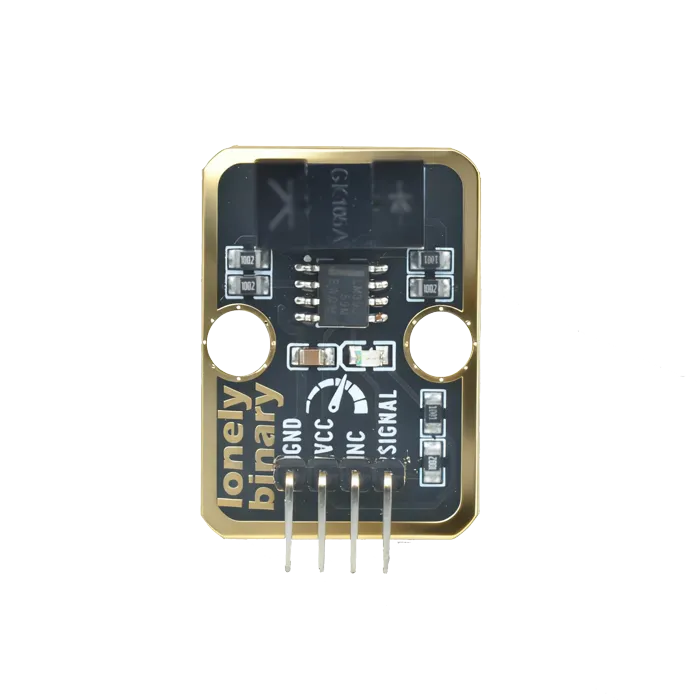
Infrared Speed Sensor
A slotted optical gate. Put an encoder disc through it and you can count revolutions — reliably, at speeds a mechanical switch could not survive.
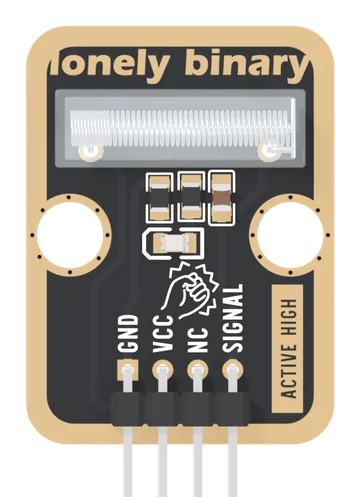
Knock Sensor
A spring vibration switch with its 10 kΩ pull-down, a 100 nF capacitor and a red flash light already fitted: SIGNAL goes HIGH for a moment each time a knock swings the spring onto its rod. A tap on a table as a button, a door that was knocked, a box that was dropped.
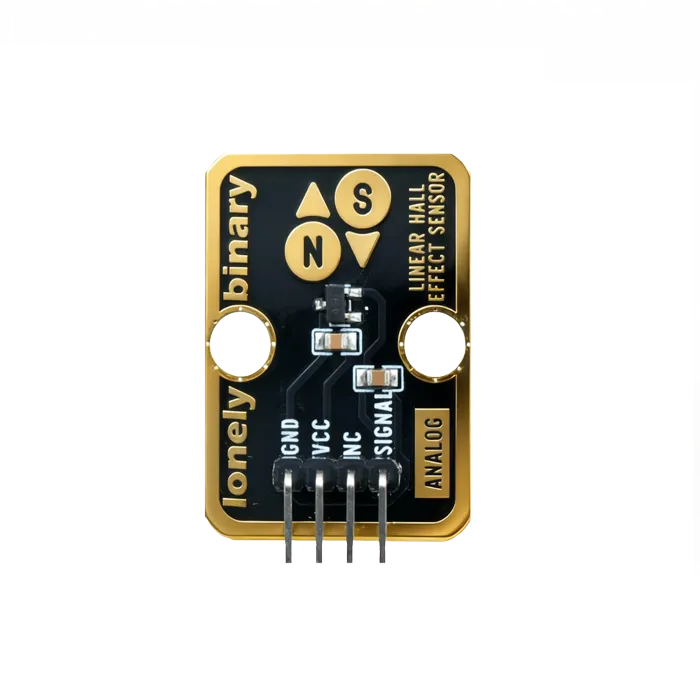
Linear Hall Effect Sensor
Magnetic field strength as a voltage rather than just present or absent. Contactless current sensing starts here.
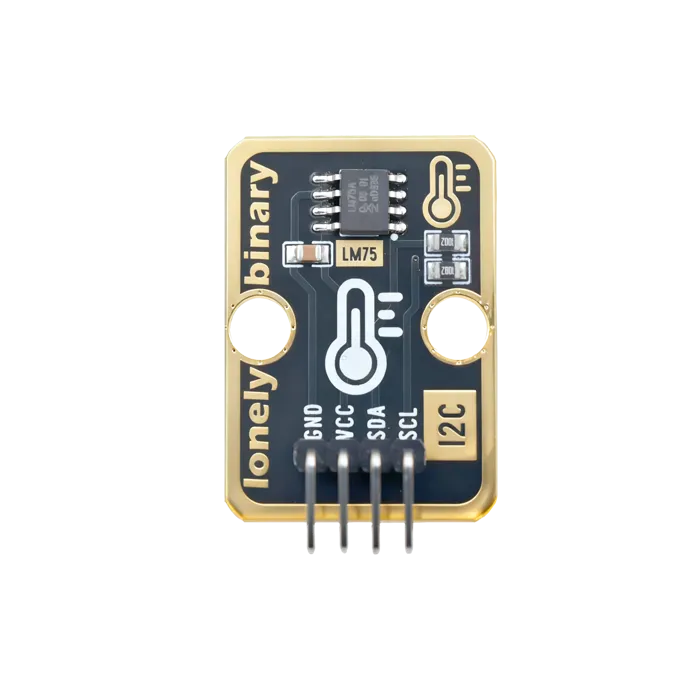
LM75 Temperature Sensor
Digital temperature over I2C, calibrated at the factory. No ADC, no maths, no drift to correct for.
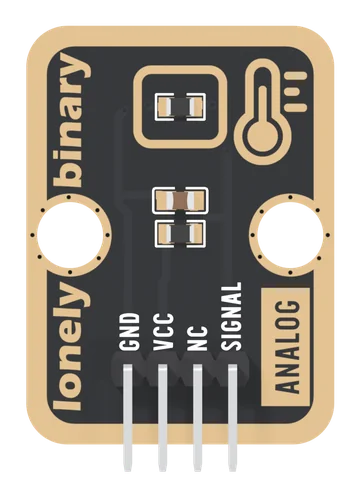
NTC Thermistor
A 10 kΩ NTC thermistor in a divider with a fixed 10 kΩ: SIGNAL is half of VCC at 25 °C and falls as it warms. Read it on any analog pin and turn it into degrees with two lines of arithmetic.
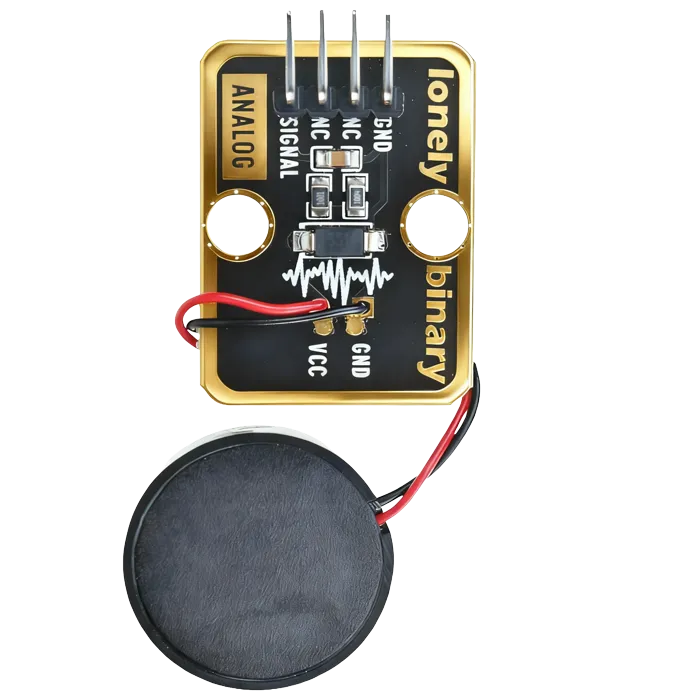
Piezo-Ceramic Sensor
A crystal that makes voltage when it bends. Vibration and impact with an amplitude you can actually read — and it needs no power of its own.
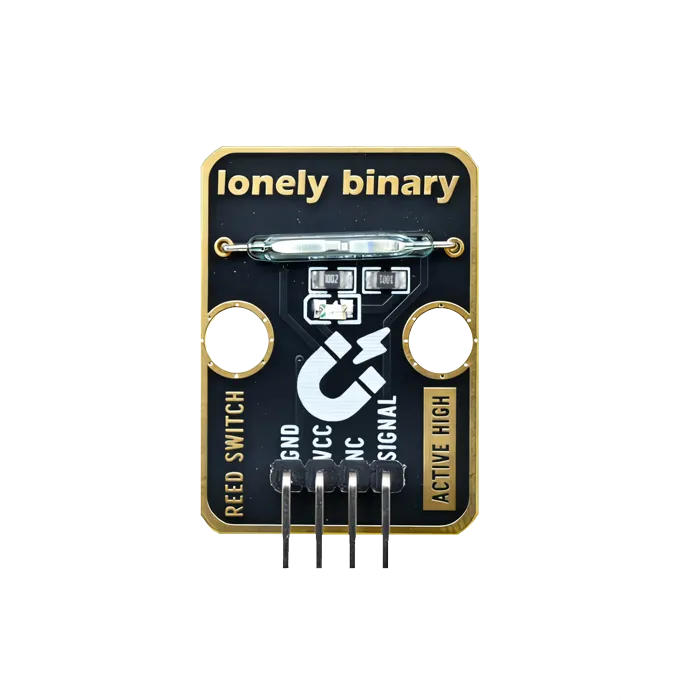
Reed Switch
Two contacts sealed in glass that close near a magnet. The window sensor in every alarm system, and it needs no power to do its job.
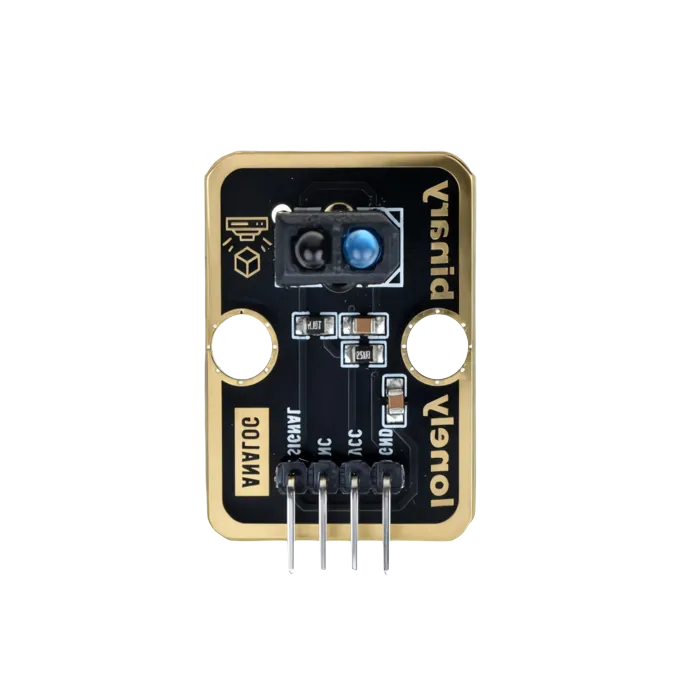
Reflective Optical Sensor
Light out, light back. Line following, edge detection, and counting things going past on a belt — as long as the surface plays fair.
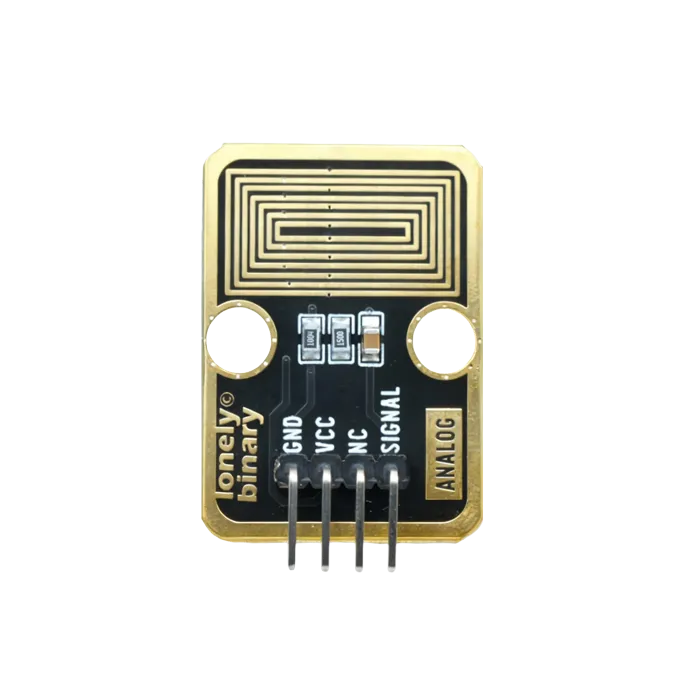
Steam Sensor
Interdigitated traces that read humidity as resistance. Rain, steam, and a plant pot that needs watering — and traces that corrode if you leave it powered.
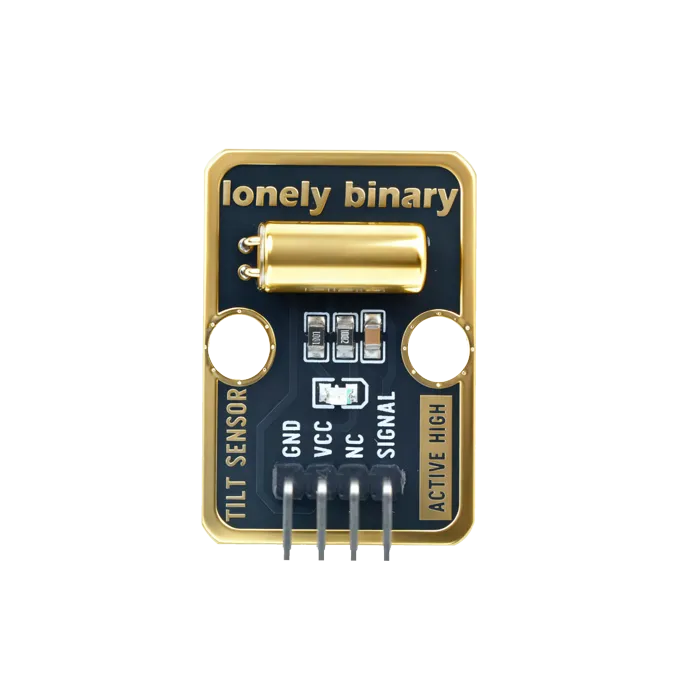
Tilt Sensor
A ball and two contacts. Upright or not, and nothing in between — which is exactly enough for a tilt alarm.
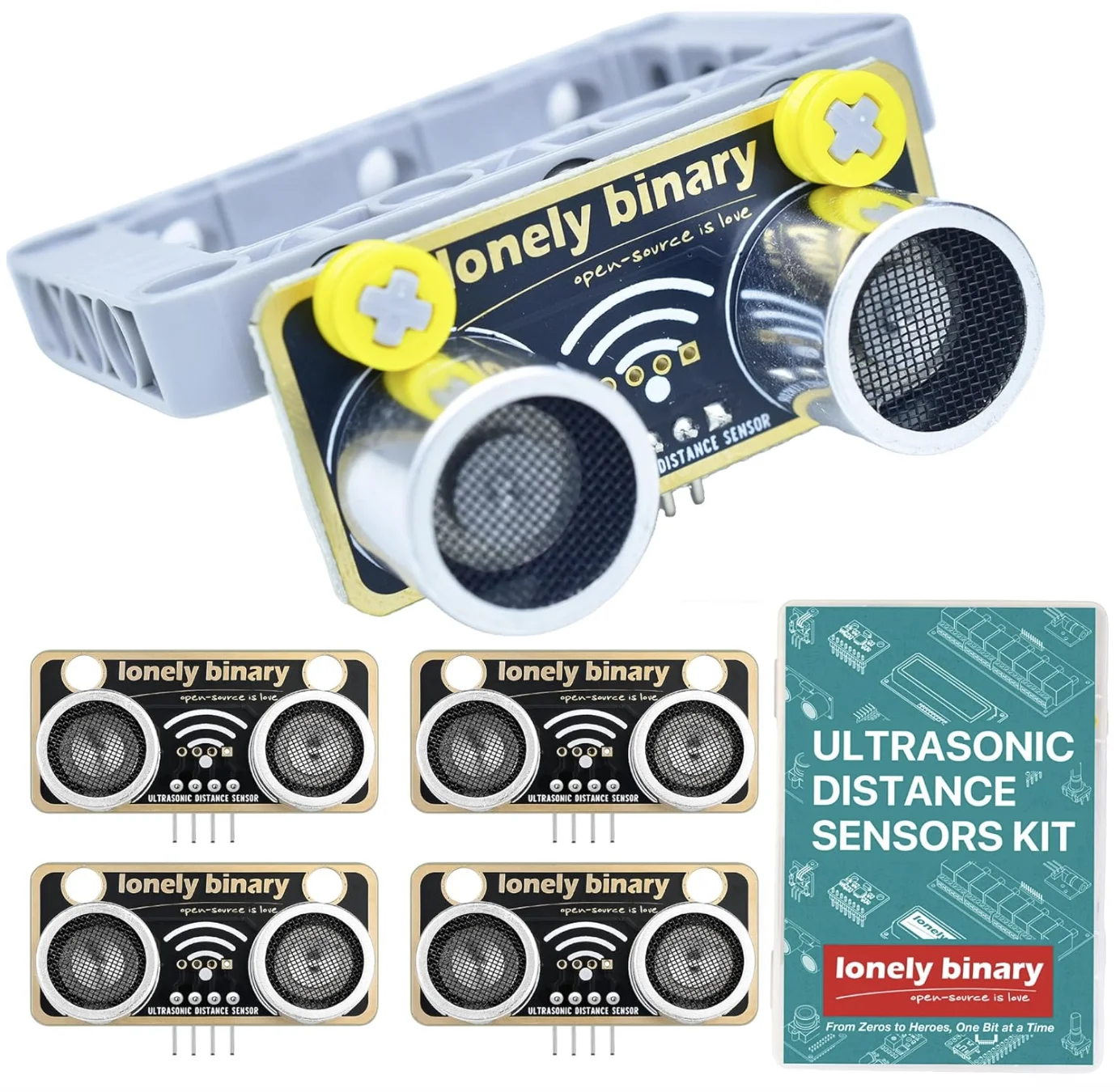
TinkerBlock Ultrasonic Distance Sensor Kit
Distance by echo timing, five to a pack — enough for a robot with a sensor on every side.
Ultrasonic Distance Sensor
Distance by echo timing, on a chip that speaks four protocols and runs from 3.3 V. Soft and angled surfaces are where it quietly lies to you.
DHT22 and DHT11 Temperature and Humidity Sensors
Two sensors on one board design, one data wire, one library. What each is worth, why the same forty bits decode two ways, and the six-pack that holds three of each.
Read a sensor
Wire a DHT22, read it reliably, and send the numbers somewhere you can see them.
Put a DHT22 on the internet in 20 minutes
Wire a temperature and humidity sensor to an ESP32-S3, and watch the readings land on a live dashboard you can open from your phone. No backend, no server, no port forwarding.